






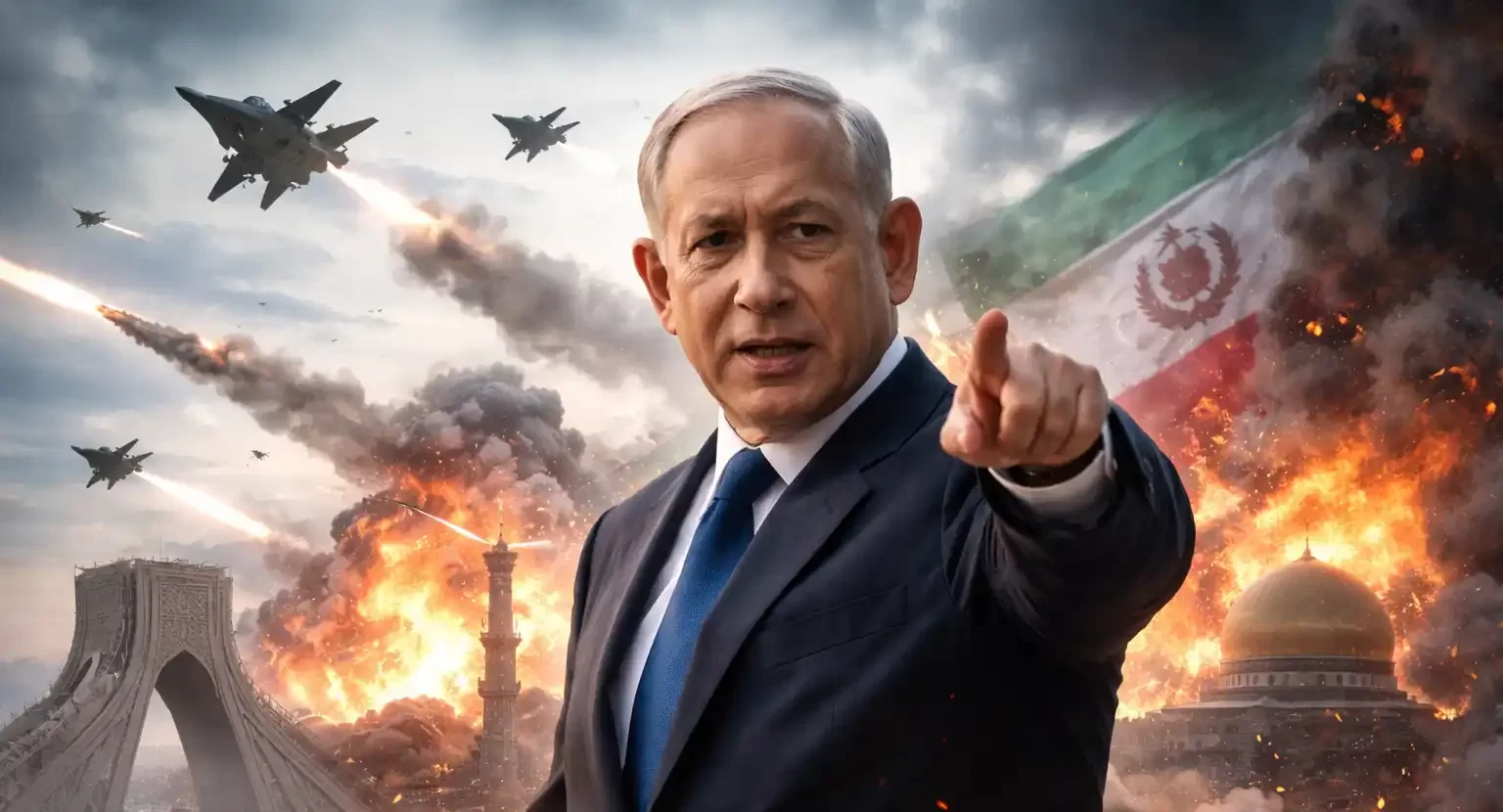
Tel Aviv/Tehran: Israel’s Prime Minister Benjamin Netanyahu said on Tuesday that the military campaign against Iran “is not over yet.” He also stated that Israel’s operations are “breaking Iran’s bones” and weakening its religious leadership.
During a visit to the National Health Command Center on Monday night, Netanyahu said, “Our desire is to free the Iranian people from the chains of oppression. But in the end, it depends on them. However, there is no doubt that the actions taken so far are breaking their bones, and we are not finished yet.”
Amid the Israeli prime minister’s statement, Iran’s Deputy Foreign Minister Kazem Gharibabadi rejected the possibility of a ceasefire with the United States this morning.
He said, “Even if they request a ceasefire, it would only be possible when Iran is convinced that they will not attack again and that they have accepted responsibility for their actions. They cannot simply come to us and say ‘ceasefire,’ and we just respond by saying ‘okay.’”
Both Israel and Iran Showing Strong Stances
Kazem Gharibabadi said, “The balance is in our favor. Their plans have failed and they have not been able to reach their goals. Iran has caused significant damage to Israel and the United States. Just look at the condition of global energy and the global economy. The advantage is on our side, and we will decide when the war will end.”
This statement by Iran’s Deputy Foreign Minister came after remarks by Donald Trump, who had said that the war with Iran would “end very soon.” The Iran war has now entered its second week and is beginning to show serious global impacts. Oil prices around the world have surged sharply.
Increase in Iranian Attacks on Israel
Tehran has appointed Mojtaba Khamenei as Iran’s Supreme Leader, replacing his father Ali Khamenei, who was killed. Following this development, Iran and Hezbollah have intensified their attacks on Israel.
Reports on Monday said that Iran launched seven missile strikes on Israel. Meanwhile, Lebanon-based Hezbollah carried out seven attacks using rockets, mortars, and drones, targeting the Israeli army along the border and inside Israel.
According to Israeli media reports, these attacks forced around five million people to take shelter in bomb shelters from Sunday evening until Monday afternoon.
Account of the Attacks on Iran
According to the Institute for National Security Studies in Tel Aviv, at the beginning of the war the United States Armed Forces carried out nearly three times more strikes in Iran than Israel. However, after the war moved into its next phase, Israeli attacks increased significantly—possibly reflecting strategy, weapon limitations, and political calculations.
During the first five days of the war, U.S. forces struck around 2,000 targets in Iran, while Israel carried out about 600 strikes.
Over the weekend, when Israel and the United States announced the transition to the next phase of the war, a shift in strategy became visible. In the second phase, Israeli forces conducted nearly three times more attacks than U.S. forces. During this period, the United States targeted about 1,000 sites, while Israel struck approximately 2,800 targets.
According to INSS data, since the operation began the United States has attacked around 3,000 targets in Iran. Meanwhile, Israel has struck about 3,400 targets in Iran and an additional 600 targets in Lebanon.

















+ There are no comments
Add yours